

The New Leader Opportunity

“Business is NOT a democracy!”

The CEO had raised his voice. I wouldn’t have said he was actually yelling, but his face was a darker shade tending toward red, and he was definitely speaking louder than he had been moments before.

My colleague, a consulting partner, was explaining that there was considerable disagreement with his post-acquisition integration plans and not just from the acquired company. This news did not please him, which caused him to so forcefully state his view of business governance.

The partner paused briefly, and then said quietly, “it is true that business is not a democracy, but it still requires the ‘consent of the governed.’”

Now it was the CEO’s turn to pause. He exhaled. His clenched jaw relaxed some and he enunciated clearly, “Fair point. . . . continue.”

The partner continued and ultimately we were engaged in a post-acquisition integration restart project, which featured the combined leadership team making decisions about which businesses would be left alone, which spun off, and which would receive additional investment. Staffing, the issue that had caused the dissent, followed those decisions. The CEO was sanguine about the outcome, but I think still believed that people should have just done what he told them to do.

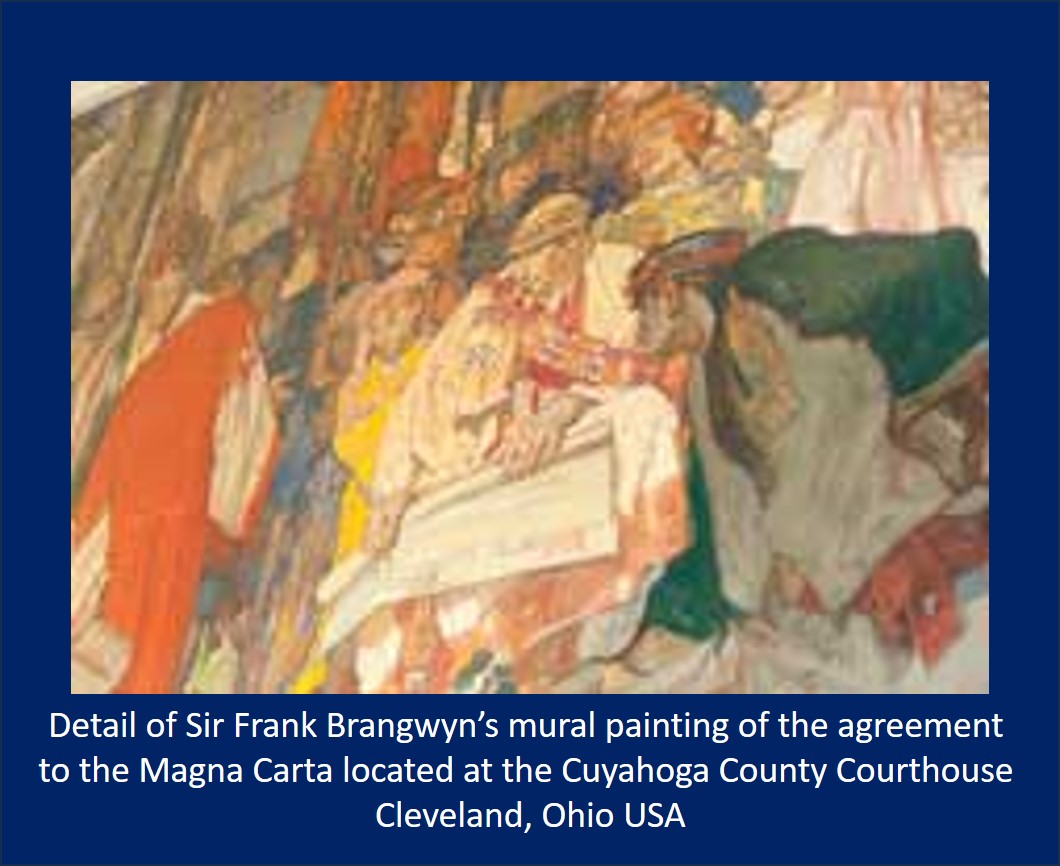
I recognized the “consent of the governed” phrase from the US Declaration of Independence, but it turns out to be older than that, June 15, 1215 to be exact, the Magna Carta. The English King John affixed his seal to a document written by his barons, facilitated by Stephen Langton, Archbishop of Canterbury, which gave people rights to have input into laws that governed them, and justice “equally” before those laws.

Business is not a democracy, but lack of input and perceived injustice can still cause people to vote with their feet, either dragging them or using them to walk out, taking critical knowledge and skill with them.

The New Leader Opportunity

Acquisitions are one new leader opportunity. Suddenly you are leading a whole new group of people and if you treat them as the “spoils of victory,” you will make acquired company staff aware of their feet. You will also telegraph to everyone else how little you value expertise.

Anytime you lead a new group of people it is a new leader opportunity. The opportunity communicates how you value followers, or don’t. Unity, input, transparency, and fairness are watchwords.

Sometimes new leaders come from inside the organization, sometimes they are hired from the outside, but often they are put in the role to make a change. This is most visible at the CEO level. Jack Welch was promoted from the GE Plastics division to replace Reg Jones; Lou Gerstner was hired from RJR Nabisco to replace John Akers at IBM. Both had board mandates to radically change their corporations. However, any new leader can come from inside or outside, and almost always those that do the hiring expect that something will change. Understanding that expectation is the first step for a new leader.

The Why

At the CEO level there is often a decline or lack of growth in revenue or profitability or both that moves the board to act. Sometimes at lower levels, there is a lack of improvement, or innovation, or there are some people issues driving the change.

A new leader must understand and explain why people should choose to change.  What has changed with customers, competitors, technology that necessitates doing something different? And why not changing is not an option.

“Because I said so” rarely worked with my children, but it definitely doesn’t work with adults. Nor do the corollary statements ‘we bought you,” the “boss or board says so,” or any other “my way or the highway” sentiments. People may comply, in the short term, but they will also become aware of their feet.

Insight – Action – Results

This is the model I used to frame change. Insight is the data behind the why. Action is what we do more of, less of or differently. Results are the outputs we are trying to achieve. It is simplistic. For most changes, there will be breakdowns between insight and action, as people take different times to understand or act. There will be actions that don’t produce the desired result and “back-to the-drawing-board” moments. But a leader must frame what we are trying to do and why and engage people in the how and when.

The Who

Rarely do the same people who got us here, get us there. Oh, it is possible that the status quo folks will seamlessly become the passionate converted to the new vision. But frequently, those who lead the new change will be those outside the existing power structure. It’s why Jim Collins made the first step of Good to Great, decide “who’s on the bus. This is the essence of John Kotter’s “guiding coalition,” from The Heart of Change.

So who is on the bus? My list of criteria includes people who: :

  • Have internalized the “Why” of the change.
  • Are true problem solvers who invest the time to define and analyze a problem, not just suggest solutions before having the facts.
  • Have extraordinary communication skills – looking for clarity over eloquence, and simplicity over sounding smart.
  • Others listen to. (This often has nothing to do with positional power, but everything to do with competence.)
  • At least one person who immediately jumps to the “worst case scenario.” This is your risk assessor, your seer of unintended consequences. You don’t want a whole team of doom and gloomers, but one or two people with this view – and a sense of humor – can help avoid disaster.

Wasting the Opportunity

Often, you get one opportunity as a new leader, to attract followers, to engage people and help them choose to change. If you waste that opportunity, badmouthing, berating, and blaming, it is hard to come back. If you act unilaterally, or fail to have empathy and gratitude, the only people who follow will be those who want something from you. And no one will tell you when you’re blowing it.

Feedback and Accountability

Reward the people who give you the “straight skinny,” the people unafraid to say “the emperor is naked.” Even King John, who was not known to be a good king, agreed to clause sixty one in the Magna Carta.

Clause sixty-one gave the barons the right to appoint twenty-five barons ” to keep, and cause to be observed with all their might, the peace and liberties granted and confirmed to them by this charter.” The barons would give the violator (including King John) the opportunity to correct a transgression. If not corrected the barons could take the offender to trial.

King John, perhaps the worst king in Britain’s history, agreed that he was not above the law and could be held accountable. He didn’t live up to it, but others have since.

So business is not a democracy, but it does require the consent of the governed and some accountability beyond stock options and bonuses.

Please join the conversation by leaving a comment below.

If you enjoyed my writing, please click the button below to subscribe to receive 1-2 posts per week, no ads, no affiliate links and I will never sell, trade or otherwise distribute your information. You can unsubscribe at any time by clicking unsubscribe on the email.

A Friday Some Years Ago:

9:00. Phone rings.

“Hello? Oh, Hi Ken…”

12:00 noon. Phone rings.

“Hi Ken, what’s up?”

4:45 p.m. Phone rings.

“Hi Ken… Say Ken, Are you checking on me?”

“Well, actually, yeah. When I work from home I only get about two hours of work done all day. What with the kids and the dog, trying to work from the kitchen counter, and the TV, and computer games. It’s very distracting. We pay you quite a lot and I was just trying to see if you are actually working.”

“OK, Ken, I get it. But I’m in my office on the second floor of my house. It has a desk, phone, files and computer. There’s no TV. I have no games on my computer. My kids are grown and don’t live with me. The dog is old and goes out before work and after. Besides Ken, I only charge you when I’m actually working. We can review the training I wrote today if you’d like.”

“Well, I’m headed home; can you email it?”

“Sure.”

My client was new to the job and he had inherited a consulting team. To him it was easy to see us working when we were on site, but given his personal experience working from home, he couldn’t imagine us working productively on Friday, when we weren’t on site.

In fact, for certain kinds of head-down individual work, I got a great deal more done on Fridays than I did during the week, when I had to attend meetings with clients and build commitment to change. However, I understood that many managers in offices shared Ken’s experience and the concerns that arose from it.

Then Came Covid

Durin the coronavirus pandemic, workers in factories, healthcare, first responders, retail, and food service risked their lives and office workers learned to be productive “working from home.” Office productivity didn’t suffer as expected and office workers liked the flexibility, the lack of wasted commuting time, and not wearing pants on Zoom calls.

I retired in 2018, so this really didn’t affect me directly. I heard about it from my kids. One time consulting colleagues called to ask how I worked as an independent consultant. People asked about my home office and what the IRS required to deduct the set-up of a home office, (dedicated space, documented use, and expense receipts). I started to see jobs advertised as “remote,” or “hybrid.”

Some people figured out they could work from anywhere and you saw magazine articles of people working from the deck of their beach house. I was always jealous of that because I didn’t have a beach house.

Some people complained about the isolation of Covid-time. As the pandemic died down, some people reminisced about standing on balconies of city apartments banging pots in support of first responders and healthcare workers. Covid was something that affected us all, a unifier after a time of division.

Then Covid was (finally) over

Well, not really over. Covid is still around. We’re just done with it, over it; Covid is so four years ago. For the last four years, there has been a discussion building.

“OK everybody, it’s time to return to work.”

That one pissed off all those workers in factories, healthcare, first responders, retail, and food service who risked their lives.

“We never stopped working.”

So R-T-W became R-T-O, “return to office.”

Some were enthusiastic; some were less so. Sure, there would be less isolation, but more colds and flu (and Covid whispered the risk averse). And then there is wasted commute time. And then there is the flexibility of working when I want. And then there is the fact that I don’t have to stay late because Mary bent my ear about her mom, and Ted just had to relive the highlights of the big game, etc.

“OK, well, what about two days per week?”

“Maybe.”

“Three?”

“I don’t know.”

It’s been a long four years.

This conversation has been slowly accelerating. I must admit that, Boomer dinosaur that I am, I wasn’t particularly won over by the Gen X, Y, Z, Alpha whines about commuting costs and cleaning bills for the pants they would now have to wear. I also thought that some workers were being clearly unreasonable in their demands.

My nephew runs a retail food business and told me about job applicants who asked if they could “do the retail floor job remotely.” Some jobs require face time.

Culture is built by being together. Teams function best if they actually know each other. I began to hypothesize that introverts would want to work at home but extraverts would want to return to the office. It turns out there is no evidence of that.

I have had more and more conversations recently with office workers, people I respect for their intelligence and projected competence, who say, “If they insist on 5-days-in-office, I will leave.” Or “OK, I’ll come in for 9:00 and leave at 5:00, but there is no working till 7:00 and no calls on nights and weekends.”

There have been some famous CEOs who have gone public “R-T-O or else!” At a recent cookout, huddling under a canopy during an inconvenient downpour, I was engaged in conversation with the manager of administration for the board of directors at a money center bank.

“My CEO is friends with another CEO who has drawn a very public line in the sand, but my colleagues, my boss and three quarters of my staff will walk if he enforces the RTO mandate. Most of the board are off site and 90% of my work is email and phone. I have to be here for board meetings and two or three days a week is reasonable. Five is a hard “No!”

I began to think that managers, even CEOs, who insisted on a 5-day RTO mandate, might be driven by their own convenience  ̶  “I want to turn around an give someone a job directly. I don’t want to find out they’re ‘shirking from home’ and have to call them.”

Then, in today’s New York Times, I came upon an article by Adam Grant, et al, at the Wharton Business School, that quotes research, that demonstrates that:

“ One: Return-to-office mandates don’t increase profits by weeding out people who lack commitment. They motivate the most talented people to jump ship. Two: As long as people are together for half the week, remote work isn’t isolating. And three: Hybrid work isn’t bad for performance, innovation or connection. “

Grant et al go on to describe how adamant RTO mandates are most often pushed by narcissistic managers that require constant attention, as demonstrated by the size of their pay packages, offices, and their photos in the annual reports.

So where does that leave RTO?

It depends. There are clearly some jobs that require presence, just like first responders, and retail workers, if your job has a face to the public, well, you gotta face the public. If your job has more individual than team work, you might have more of an argument for remote or hybrid work.

If you are a manager, who just can’t get over the fact that, “Hey, I got up every day and went into the office. I sucked up to my manager and now its my turn,” then maybe look in a mirror. Get over yourself, and see how you can lead change three days a week or on Zoom without any pants.

You may also like. . .

Sacrifice

Sacrifice

My Memorial Day verse was not published the first time I tried, seems I’m cursed by technology’s worst. Here’s hoping this remembrance burst makes it now.

read more

Please contribute your thoughts in a comment. The author will be notified, but may not respond to every comment. The site reserves the right to delete comments it deems off topic, offensive, or spam.

2 Comments

  1. Bob Musial

    “Business is not a democracy, but lack of input and perceived injustice can still cause people to vote with their feet, either dragging them or using them to walk out, taking critical knowledge and skill with them.”

    Totally agree, Alan. Still don’t understand why people in positions of power don’t grasp the concept.

    My guess is that common sense isn’t factored into their thinking.

    Reply
    • Alan Culler

      I think common sense may be misnamed, Bob. 😊
      Thanks for continuing to read and comment on my writing. I appreciate it.

      Reply

Submit a Comment

Your email address will not be published. Required fields are marked *