

Consulting is a time-based business.
Sure, there are always firms that try to break this mold with products like surveys, or packaged research. And there are some firms that experiment with gain sharing, a percentage of revenue increased or costs saved. In my experience, that creates a conflict between client and consultant, especially if the fees exceed the norm. For the rest of consultants, Consulting Success = Billable Hours.
Successful consultants get good at time management. They get good at estimating how much time a piece of work will take, and continuously improve on that time. This is a useful skill outside of consulting. I got reasonably good at this skill, but it never transferred to my weekend To-Do List. I still try to cram a week’s worth of work into two hours on a Saturday morning.
Consultants must maximize their billable hours, so that the client is paying their salary plus a multiplier of 2 ½ – 5 times salary. This is how consulting firms pay for marketing, training, all overhead, and then make money. Firms track consultant “application rate” or “utilization rate,” the percentage of time a consultant is billable. Even partners, whose primary responsibility is sales, must be applied 20-40 %. Juniors are expected to be utilized up to 80%.
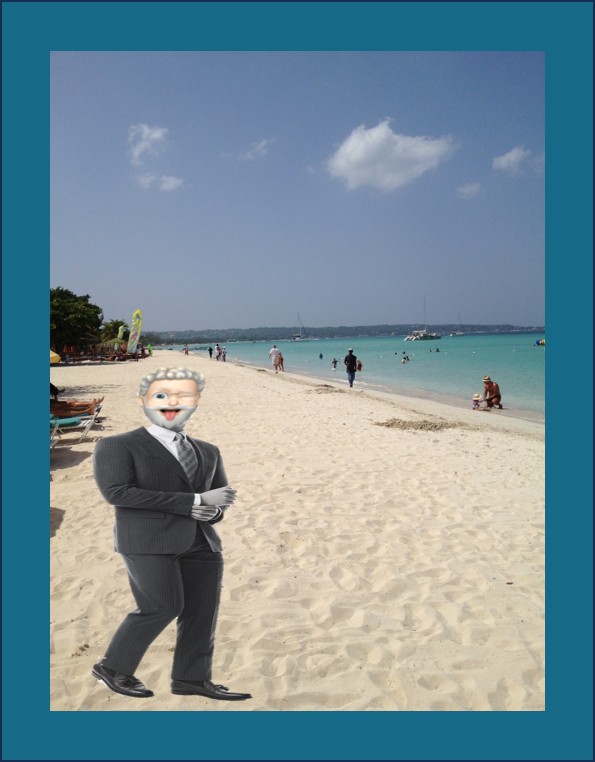
There are times when client demand simply doesn’t match staffing level. The unapplied people are described as “on the beach.”
This euphemism is the worst I have ever experienced. It sounds nice – waves, white sand, and sunshine – when actually it is a warning sign that you could be let go, and soon.
Staffing is done differently at various consulting firms. Some have a team of “on the beach” senior consultants do it. Some make staffing the exclusive purview of partners. However it is done, consultants are told “Do NOT attempt to do your own staffing.
And yet…
Consultants are seriously penalized if they are under-applied….
What should you do if you find yourself “on the beach?”
First, never be seduced by the “time-off” sound of the phrase. Do NOT take vacation time, unless you have a project lined up that will start in one week more than what time off you have planned. There are plenty of opportunities to schedule vacations in consulting, don’t take one that is imposed upon you.
You need to be visible, so do not “work from home.” Go to the office. Work on building your capability and that of the firm. Hear are some ideas:
- Volunteer for research on potential clients, competition, new service offerings.
- Attend internal or external training or attend conferences, being sensitive to cost. Capitalize on the opportunity to share what you have learned in a report or presentation.
- Read new articles and books and similarly share what you have learned.
- Train others. Some large firms have training departments; if you work for one of those, volunteer to co-train or coach. If you work for a smaller firm, train colleagues.
- Learn to use a new technology. Artificial Intelligence platforms will generate new releases. There may be new instant surveys, electronic presentation geegaws. Whatever you choose, have a plan to train others so you don’t get stuck being the new-tech person, which might limit your staffing more.
Think like an independent consultant
If you worked for yourself, or in a small firm, or network, and you’re “on the beach,” you would be laser focused on one thing: FINDING A CLIENT!
Marketing, client acquisition and development, sales, whatever you call it, finding clients is never far from the mind of an independent consultant. I spent twenty-three of my thirty-seven years in consulting working for myself in one structure or another.
So if you’re an independent, you learn never to get so wrapped up in a delivery that you can’t leave twenty-five percent of your time available for finding your next project. Unless you’re famous, it takes between three and six months to find a client. I found clients exclusively through referral, so I kept in touch with previous clients and asked if they “knew anyone I should be talking with.”
Other independents I know write (a lot), or do speaking engagements, or work social media and mailing lists. I know some that work with telemarketers and make cold calls.
If you are inside a firm, you can do these things too.
I know, I said you will be told NOT to manage your own staffing, because it is done by someone else. I don’t recommend that you deliberately, publicly defy firm policy. However, virtually every successful consultant takes responsibility for their own staffing. Here are some things I’ve seen successful consultants do:
- They always deliver well.
- They get good at estimating time and improving what it takes for a piece of work.
- They are easy to manage – helpful to others – and fun.
- They “Sharpen the saw” – Stephen Covey’s phrase for self-directed personal improvement. (See capability building ideas above.)
- They build relationships, even when they are fully applied:
- Relationships with internal staffing people.
- Relationships with partners.
- Relationships with the administrators of business developers, “What’s she working on?”
- Relationships with project managers – it’s an easily observable fact that project managers call on the same “teams” over and over again.
You can’t start these only when you need a project. These things should be a part of your habits from the beginning. However, if you need a project and don’t have a mentor, find one. Talk to colleagues, sometimes two people solving the “I need a project” problem together is 1+1 = 3. You can “buddy-up” on capability building too.
If you are thinking like an independent, you’ll have a client acquisition mindset, which is the primary criteria for promotion to partner. In any case, it will get you “off the beach,” which is where you want to be.
More ideas for new consultants




0 Comments